

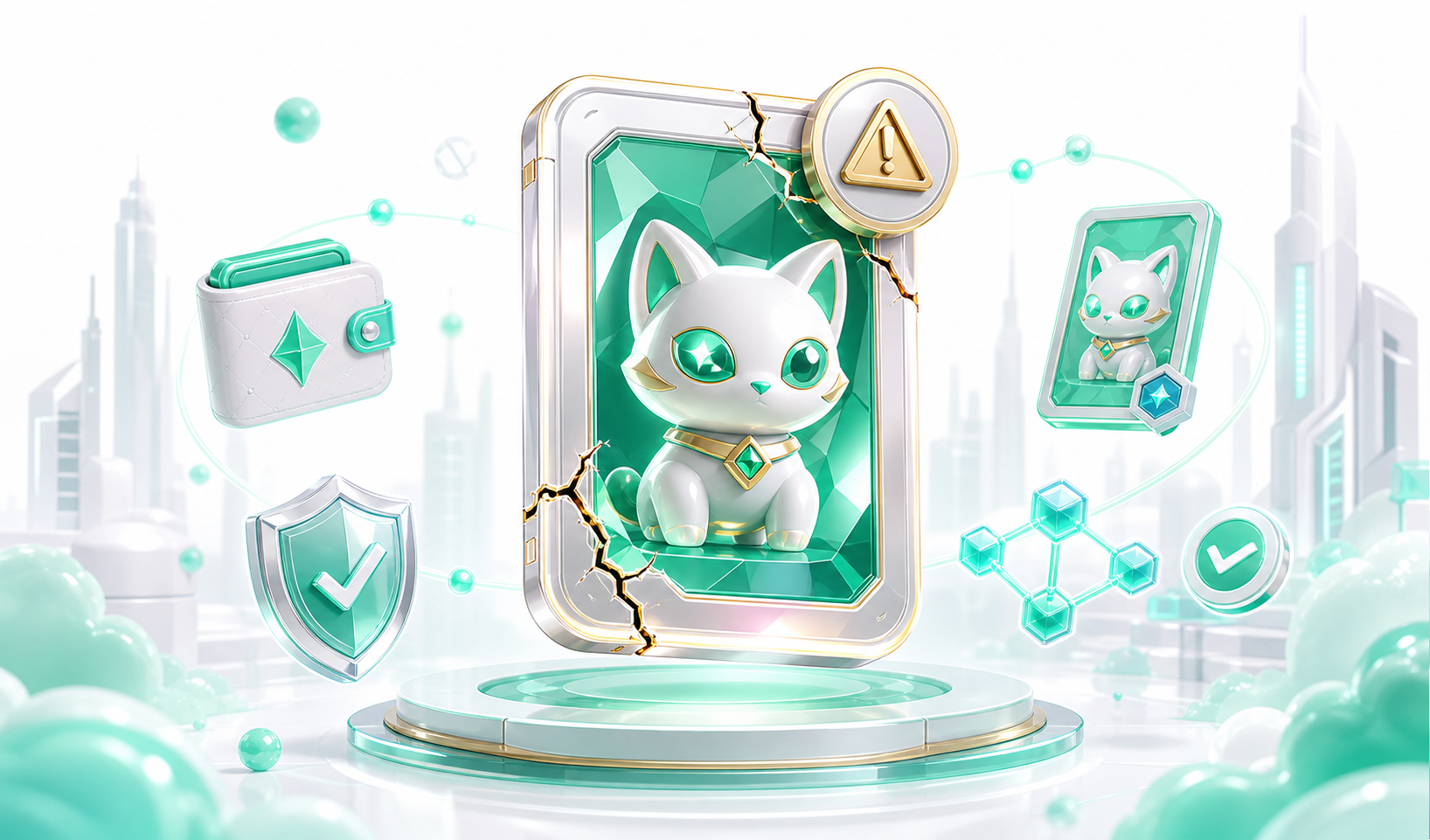
An NFT transaction becomes risky not when you look at the image, but when you sign. The wallet confirms an action with a smart contract, the network charges a fee, and ownership or permissions may change. Before buying, selling, minting, or transferring an NFT, check the network, contract, rights, marketplace terms, and the meaning of the signature.
First define the type of operation
Buying, selling, minting, transferring, and accepting an offer are different actions. Buying focuses on authenticity and price. Selling requires listing terms and marketplace fees. Transfers require the correct recipient and network. Minting requires extra attention to the contract and permissions.
Common mistake. Treating every wallet signature as the same. One request may only confirm login, while another may approve an asset-related action.
Check the network and contract address
An NFT exists on a specific network and belongs to a specific smart contract. Collection names and images can be copied, so authenticity should be checked through the contract address, official project links, and marketplace collection page.
If a link comes from an ad, private message, or search result, open the project’s official source separately and compare the addresses. Phishing pages often look convincing but point to another contract or malicious signature.
Pre-transaction check | Why it matters | Common mistake | What to do first |
|---|---|---|---|
Network | Defines fees and wallet compatibility | Buying or transferring on the wrong network | Check network in wallet and marketplace |
Contract | Confirms collection authenticity | Trusting only name and image | Verify contract through official source |
Rights and license | NFT does not always grant commercial rights | Assuming token equals copyright | Read the collection terms |
Signature | May authorize an asset action | Signing unclear requests | Read the wallet action type |
Rights: an NFT is not always copyright ownership
Buying an NFT usually means owning a blockchain token, but it does not always grant commercial rights to the image, music, or character. The rights depend on the project terms, license, and marketplace rules.
Term explanation. Metadata describes the NFT: image, attributes, and file links. Legal rights are determined by project terms and applicable law, not by the image alone. If the NFT is intended for a brand, merchandise, or public use, this check is essential.
Fees, royalties, and final price
The final cost of an NFT transaction may include token price, network gas, marketplace fees, and creator royalties. Do not guess these numbers: review the final transaction screen and the rules of the specific marketplace.
If the network is congested, fees may change. If the collection price is volatile, an offer or listing can become unattractive quickly. Refresh the page and check the final details before signing.
Signature and approval safety
A wallet may ask you to sign a message, confirm a transaction, or approve a marketplace contract. The danger is automatic approval. Before signing, check which asset is affected and what action is being allowed.
- Do not sign a request if the action is unclear.
- Do not connect your main wallet to random sites.
- For mints and new collections, use a separate wallet with limited balance.
- Periodically revoke old approvals with trusted tools.
Step-by-step checklist before the operation
- Define the action: buy, sell, mint, transfer, or offer.
- Check the network and native token needed for gas.
- Verify the collection contract through an official source.
- Read rights, royalties, and marketplace fee rules.
- Check recipient address or listing parameters.
- Read the wallet signature screen before confirming.
Frequently Asked Questions
Can an NFT be returned after a wrong transfer?
Usually no. If it is sent to the wrong address or unsupported setup, recovery is generally impossible without the recipient’s cooperation.
Does an NFT give copyright to the image?
Not automatically. Token ownership and commercial rights are different. Read the project license and marketplace terms.
Why check the contract address if the collection looks correct?
Names, avatars, and images can be copied. The contract address helps distinguish the original collection from a fake one.
Conclusion
An NFT operation requires the same discipline as any crypto transaction: check the network, contract, price, rights, fees, address, and signature meaning. The more valuable the asset, the less room there is for automatic clicks.
The best rule is simple: understand what you are signing before you confirm it. If an interface pressures you into a quick signature for a rare opportunity, pause.
